Using Charcoal Pencil with Artist Robert Dutton
Learn the basic techniques and tools required to begin a charcoal artwork and the process of layering techniques that build up a finished piece.
Get your charcoal pencils out and follow along to see what new tips and tricks you can pick up along the way. Drawing is a great mindful activity to distract you from everyday life!
Project and instructions by Robert Dutton
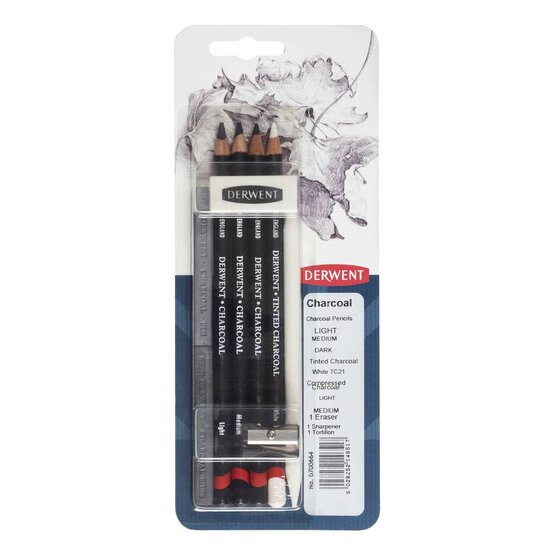
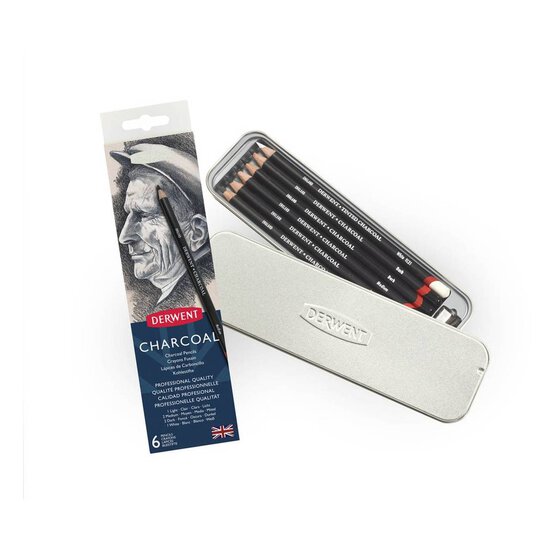
You will need



How to make
Putting the pencils into practice!
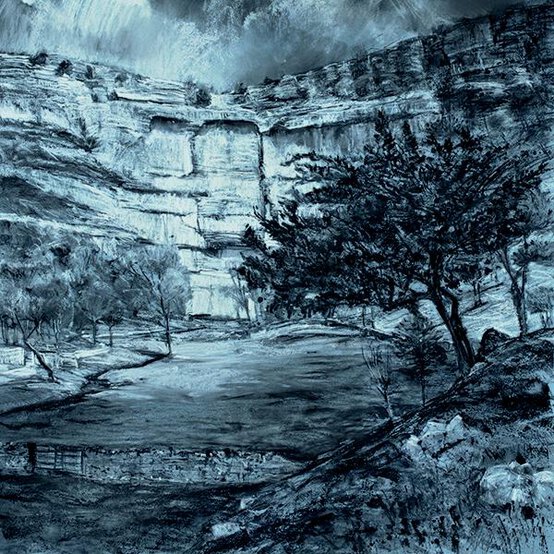
The drawing began with loose gestural strokes of steel grey paper – a mid tone paper which helped show off the quality of the white, light, medium and dark charcoal pencils.

Having outlined the main compositional elements with all black pencils, interchanging regularity between each, I quickly was able to establish the framework for all drawing. Next came the highlights to keep the drawing in balance.
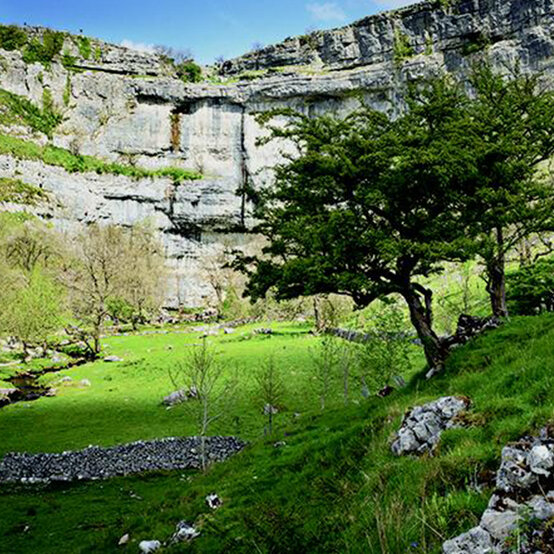
I found the white pencil not only a very useful to imply highlights in the rock face of Malham Cove and clouds above but also to act in part, like a blending tool itself to create transitional tones from dark to light in lots of interesting ways. The additional use of white help builds up this richly layered drawing even in the early stages.
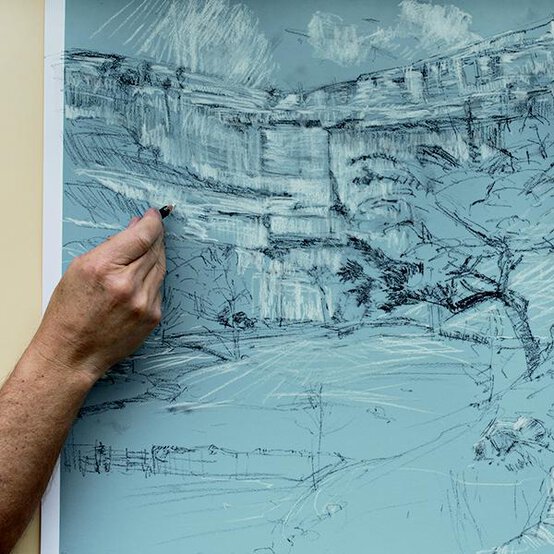
Using a wide variety of continued linear marks – cross hatching and blending whilst varying the pressure of the strokes, the shapes, form and tones in the drawing quickly developed.
The rich high grade charcoal pigments in the pencils inspired a clean method of drawing helping keep everything controlled and progressive. Fixative was used at regular stages during the layering of tones to increase the darks and add more drama and contrast to areas within the composition.
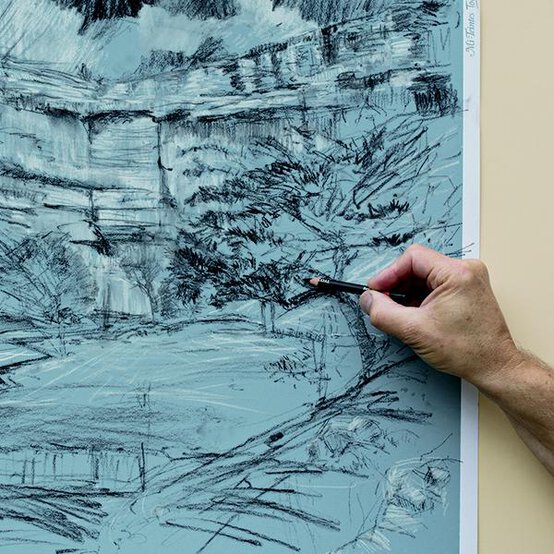
Having both mid tones, highlights and some darks it was the turn of the foreground to receive greater attention with increased pressure strokes interchanging between pencils as I worked
I used the dark pencil in selected areas to increase the tonal range to add more depth in chosen areas of the drawing.
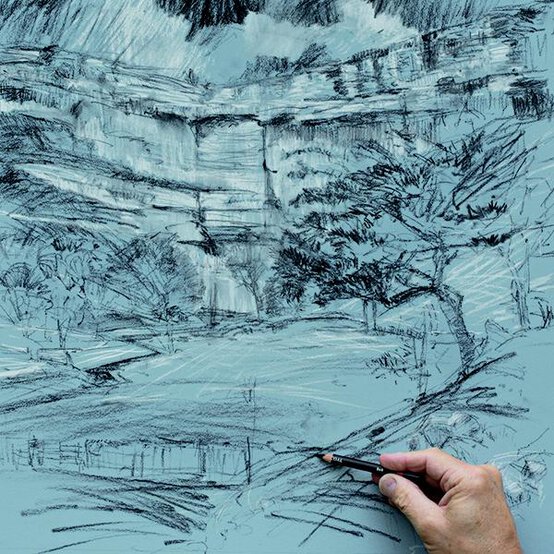
Foundation drawing completed.
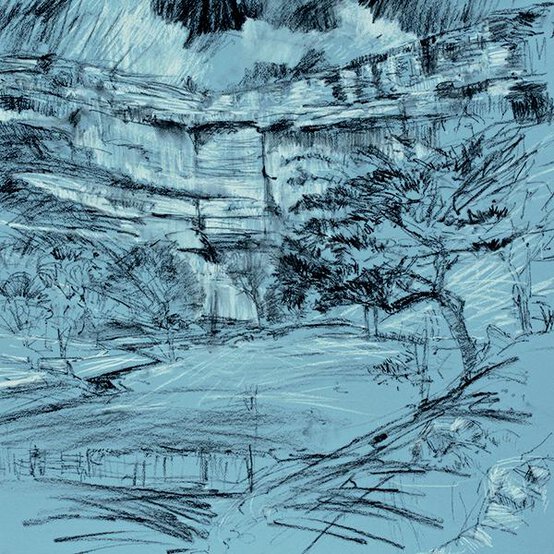
In several areas of the drawing (to include chosen areas in the clouds) the Derwent blending paper stumps easily created controlled smoother passages of the clouds forms and weathered rock faces adding a smooth blend to them I particularly liked and found useful.
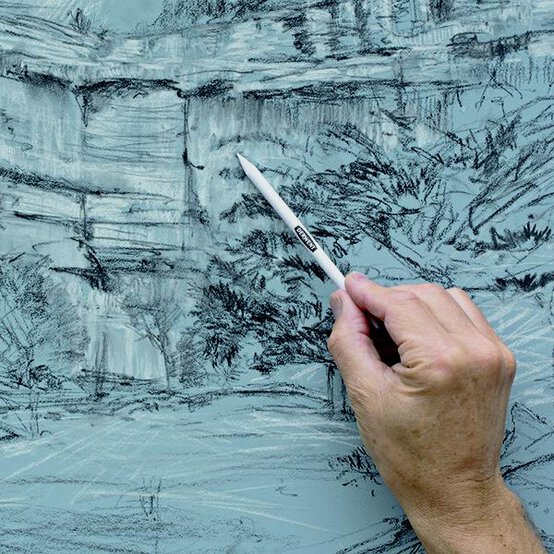
As a different response to slightly more textures areas in the clouds created using the different pencils, I wanted to express the smoother transient effects in some clouds.
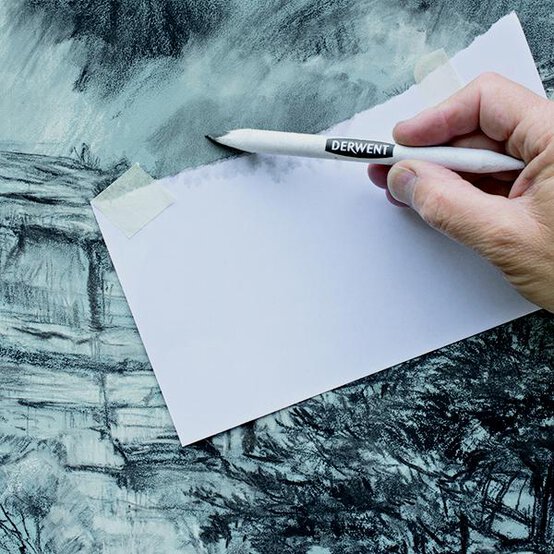
I masked off the drawn areas under the clouds in the cliff face to protect them for the next stage – blending. Using a thin piece of torn white photocopy paper I held this in place with some masking tape so it didn't move. Using the large Derwent Paper Stump, I carefully blended areas of white, light and medium pencils together to create different tones of grey in the cloud forms as shown crossing over the paper as I worked to ensure an even tone next to the rock face.
To increase the visual expressive response to textured surfaces in the drawing I chose to use a wet watercolour brush to help 'paint' with the charcoal. Selecting unfixed areas the high pigmentation of the charcoal pencils dissolved quickly and easily together to form a rich black 'movable paste' to paint with.
These washes worked brilliantly to add contrasts in texture to all the drawn areas throughout the composition and create visual interest as well as expressive response in particular to shadow areas under the foreground Hawthorn tree.

Once these washes had dried the entire painting was assessed for brightest high key areas (whites) rich darks (dense shadows) and subtle halftones.
Final marks were created in all these areas to increase maximum contrasts to complete this expressive yet accurate drawing of the dramatic vantage point.